
Micro-TESE is an advanced surgical procedure in Turkey that enables sperm to be retrieved from testicular tissue using a microscope in men who have no sperm in their ejaculate. The retrieved sperm can be used in in vitro fertilization (IVF) treatment.
Infertility is one of the significant health challenges faced by many couples today. When pregnancy cannot be achieved despite regular unprotected intercourse over a long period, both female and male factors should be evaluated. Male infertility may occur due to problems related to sperm production or sperm transport. In some men, however, no sperm cells are present in the ejaculate. This condition is called azoospermia.
In the past, achieving pregnancy for men diagnosed with azoospermia was considered extremely difficult. However, thanks to advancements in modern reproductive medicine, it is now possible in some cases to retrieve sperm directly from testicular tissue. One of these advanced techniques is the Micro-TESE (Microsurgical Testicular Sperm Extraction) procedure.
The Micro-TESE procedure is an advanced surgical technique particularly used in men whose sperm production is severely reduced or who have no sperm in the ejaculate. During this procedure, testicular tissue is examined under a microscope to identify areas where sperm production is occurring, and sperm cells are carefully retrieved from these areas. The retrieved sperm can later be used in IVF treatment.
Turkey has become one of the countries where Micro-TESE procedures are successfully performed thanks to advanced fertility centers and experienced specialists. A multidisciplinary approach is essential in the treatment of male infertility. Assoc. Prof. Dr. Nazlı Korkmaz evaluates couples comprehensively during infertility treatment and helps plan advanced reproductive techniques such as Micro-TESE when necessary.
Micro-TESE is a surgical method that allows sperm cells to be retrieved directly from testicular tissue with the help of a surgical microscope. This procedure is mainly used in cases of non-obstructive azoospermia, where sperm production is severely limited.
Unlike the standard TESE method, Micro-TESE is performed using an operating microscope. This allows surgeons to identify small areas of active sperm production more easily. By operating under magnification, unnecessary tissue removal can be minimized while increasing the chances of finding viable sperm.
The Micro-TESE procedure is not suitable for every male infertility case. It is typically recommended in situations where sperm production is severely impaired.
When no sperm cells are found in the ejaculate and sperm production in the testicles is extremely limited, the Micro-TESE technique may be considered.
If the testicles are unable to produce sufficient sperm, microscopic sperm retrieval may be performed.
Micro-TESE may be recommended for patients in whom sperm could not be found during previous standard TESE procedures.
Certain genetic or hormonal disorders may affect sperm production. In such cases, Micro-TESE may provide an opportunity to retrieve sperm.
The Micro-TESE procedure is typically performed in an operating room under anesthesia. During the procedure, testicular tissue is carefully examined using a surgical microscope.
Before the procedure, hormone tests, genetic analyses, and the patient’s overall health condition are evaluated. The underlying cause of azoospermia is investigated at this stage.
During surgery, the testicular tissue is examined under a microscope. Small tissue samples are taken from areas where sperm production is detected.
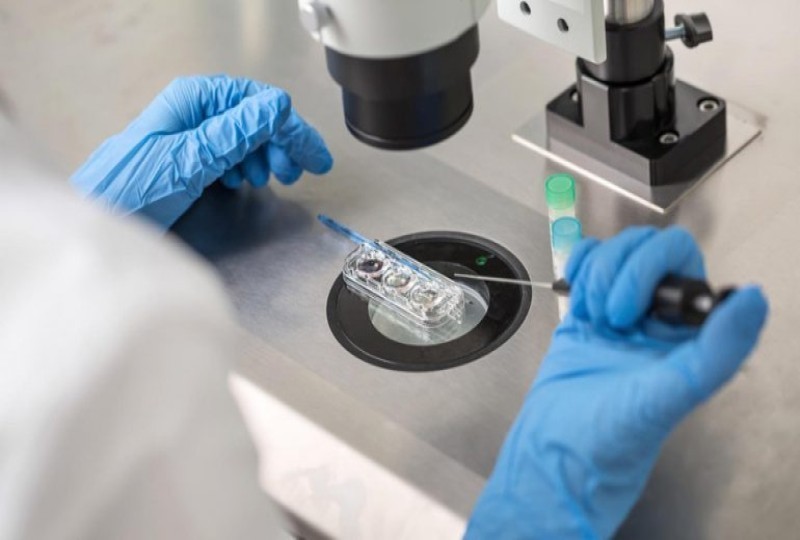
The collected tissue samples are analyzed in an embryology laboratory where specialists search for viable sperm cells.
The retrieved sperm cells can be used in IVF treatment through the intracytoplasmic sperm injection (ICSI) technique.
| Stage | Procedure | Main Purpose | Importance for the Patient |
|---|---|---|---|
| Diagnostic stage | Hormone tests and genetic analyses | Identify the cause of azoospermia | Helps determine the correct treatment plan |
| Surgical procedure | Examination of testicular tissue under a microscope | Locate areas with sperm production | Increases the chance of finding sperm |
| Laboratory examination | Sperm search by embryologists | Identify usable sperm cells | Essential for IVF treatment |
| ICSI procedure | Intracytoplasmic sperm injection | Achieve fertilization with the egg | Allows pregnancy to occur |
Before undergoing Micro-TESE, patients should receive a comprehensive infertility evaluation. Hormone tests, genetic analyses, and physical examinations are performed to determine the underlying cause of azoospermia. Lifestyle factors that may influence sperm production are also considered.
After the Micro-TESE procedure, patients should carefully follow their doctor’s recommendations. Rest is usually advised during the recovery period, and heavy physical activities should be avoided. Regular follow-up visits with the physician are also important.
The success of the Micro-TESE procedure depends on several factors. These include the patient’s age, the condition of the testicular tissue, hormone levels, and genetic factors. Additionally, the experience of the surgical team performing the procedure can significantly influence the outcome.
Turkey has advanced medical centers specializing in infertility treatments. With experienced specialists, modern surgical techniques, and advanced embryology laboratories, Micro-TESE procedures are successfully performed in many fertility clinics across the country.
The Micro-TESE procedure requires advanced surgical expertise. Therefore, it is extremely important that the procedure is performed by an experienced medical team. Assoc. Prof. Dr. Nazlı Korkmaz evaluates couples thoroughly during infertility treatment and helps determine the most appropriate treatment options when necessary.
The Micro-TESE procedure is an important surgical method used to retrieve sperm in men diagnosed with azoospermia. Thanks to modern reproductive technologies, sperm obtained through this technique can be used in IVF treatment, offering many couples a chance to achieve pregnancy.
Make an Appointment — For all your questions