
Polycystic ovary syndrome (PCOS) can make it difficult to conceive due to ovulation disorders. In vitro fertilization (IVF) is one of the effective assisted reproductive techniques that can increase the chances of pregnancy in women with PCOS.
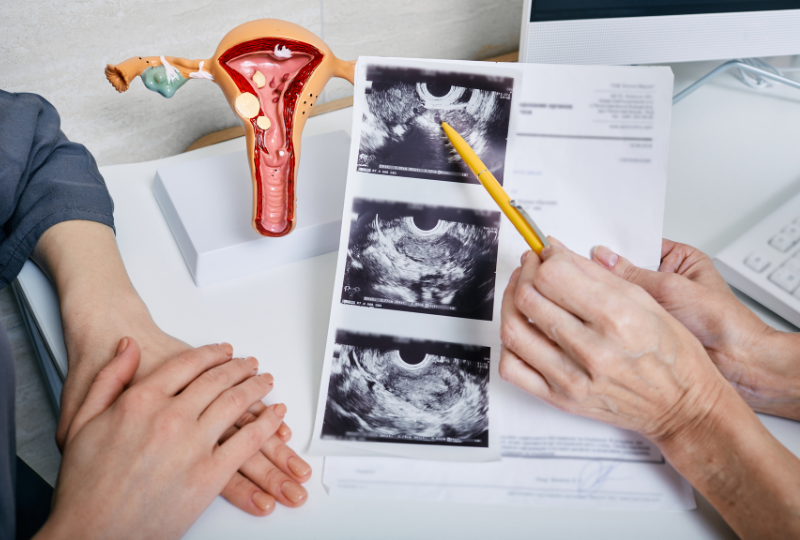
Polycystic Ovary Syndrome (PCOS) is one of the most common hormonal disorders affecting women of reproductive age and is closely associated with infertility. PCOS is characterized by hormonal imbalances that interfere with the normal functioning of the ovaries. This condition can lead to ovulation problems, irregular menstrual cycles, and in some patients, metabolic complications. For women who are planning a pregnancy, PCOS can be a significant factor that makes natural conception more difficult.
Many women diagnosed with PCOS may experience considerable psychological stress due to difficulty conceiving over time. Delayed pregnancy plans, repeated treatment attempts, and uncertainty can create emotional pressure for couples. However, with advances in reproductive medicine, pregnancy is possible for many patients with PCOS. In this context, in vitro fertilization (IVF) is considered an important assisted reproductive treatment for patients who cannot achieve pregnancy through natural methods.
Determining the appropriate treatment strategy for patients with PCOS is extremely important. Each patient may have different hormonal balances, ovarian reserves, and metabolic characteristics. Therefore, treatment planning should always be based on an individualized evaluation. Specialists experienced in obstetrics and infertility carefully assess the patient’s clinical condition to develop the most suitable treatment plan. Assoc. Prof. Dr. Nazlı Korkmaz approaches fertility treatment in PCOS patients with a personalized strategy to help ensure that the treatment process proceeds safely and effectively.
Polycystic Ovary Syndrome is an endocrine disorder that affects the normal functioning of the ovaries due to hormonal imbalance. In patients with PCOS, the ovaries often contain multiple small follicles, and regular ovulation may not occur. This condition can lead to menstrual irregularities, ovulation disorders, and infertility.
PCOS does not only affect the reproductive system. It is also associated with metabolic issues. Insulin resistance, weight gain, acne, excessive hair growth, and hormonal changes are common symptoms observed in women with PCOS.
Not every woman with PCOS experiences infertility. However, due to irregular ovulation, some women may have difficulty achieving pregnancy. For this reason, fertility planning for patients diagnosed with PCOS should be carefully evaluated by a specialist.
PCOS can make pregnancy more difficult by disrupting the ovulation process. Regular ovulation is necessary for a healthy pregnancy. However, hormonal imbalance in PCOS patients may prevent eggs from maturing properly or being released regularly.
PCOS may also affect the hormonal environment within the ovaries, potentially influencing egg quality. In addition, metabolic factors such as insulin resistance can indirectly impact reproductive health. When these factors combine, natural conception may become more challenging.
IVF treatment may be an important option for patients with PCOS, particularly when pregnancy cannot be achieved with other treatment methods. In IVF treatment, the ovaries are stimulated in a controlled way to obtain multiple eggs. These eggs are fertilized with sperm in the laboratory, and the resulting embryos are transferred to the uterus.
This approach helps overcome ovulation problems and may increase the chances of pregnancy. In many PCOS patients, ovarian reserve is generally good, making it possible to obtain a relatively high number of eggs with an appropriate treatment plan. However, careful monitoring is required because patients with PCOS may have a higher risk of ovarian hyperstimulation.
IVF treatment in patients with PCOS follows a structured and carefully planned process. Since each patient has a unique clinical profile, the treatment protocol is individualized.
In the first stage, the patient’s medical history, menstrual cycle pattern, hormone levels, and ovarian reserve are evaluated. Ultrasound examination is used to assess ovarian structure and confirm the diagnosis of PCOS.
Hormonal medications are used to stimulate the ovaries so they can produce multiple eggs. During this stage, follicle development is monitored regularly through ultrasound examinations.
Once the eggs reach maturity, they are collected at the scheduled time. This procedure is typically performed under short sedation and is generally comfortable for most patients.
The retrieved eggs are fertilized with sperm in a laboratory setting. The resulting embryos are monitored for several days in the embryology laboratory.
The healthiest embryos are selected and transferred into the uterus. This procedure is usually quick and painless.
| Stage | Procedure | Main Objective | Importance for the Patient |
|---|---|---|---|
| Initial evaluation | Hormone tests and ultrasound | Create an accurate treatment plan | Allows personalized treatment planning |
| Ovarian stimulation | Use of hormonal medications | Obtain multiple eggs | Increases chances of embryo development |
| Egg retrieval | Collection of mature eggs | Obtain cells for fertilization | An important stage of treatment |
| Fertilization | Union of egg and sperm | Create embryos | Affects laboratory success |
| Embryo transfer | Placement of embryo in the uterus | Achieve pregnancy | Final stage of treatment |
Before IVF treatment in patients with PCOS, certain preparation steps are important. Hormone levels must be evaluated, metabolic conditions assessed, and necessary blood tests completed. In some patients, weight control and lifestyle changes may also improve treatment success.
After embryo transfer, patients should take the medications prescribed by their doctor regularly. Excessive physical activity should be avoided, and stress levels should be kept as low as possible. Regular follow-up until the pregnancy test is essential.
The success rate of IVF treatment in patients with PCOS depends on several factors. The patient’s age, egg quality, embryo development, and the condition of the uterine lining are among the most important factors.
In addition, treatment carried out by an experienced medical team and the use of an appropriate medication protocol can significantly influence success.
IVF treatment helps overcome ovulation problems in patients with PCOS. Since fertilization occurs in the laboratory, embryo development can be closely monitored and the healthiest embryos can be selected for transfer.
For this reason, pregnancy may be achieved in PCOS patients through properly planned IVF treatment.
Treatment for PCOS and infertility requires individualized care for each patient. Therefore, planning the treatment with an experienced specialist is extremely important. Assoc. Prof. Dr. Nazlı Korkmaz carefully evaluates each patient’s clinical condition and helps determine the most appropriate treatment plan.
Polycystic Ovary Syndrome is a common hormonal condition that can affect fertility. However, thanks to modern reproductive technologies, pregnancy is possible for many women with PCOS. IVF treatment, when combined with proper patient selection and an appropriate treatment strategy, can be an effective method to increase the chances of pregnancy.
Make an Appointment — For all your questions